
Swawlamban (self- reliance) – for skill development and income generation
Recognizing the critical role of skill development and livelihood generation in women’s empowerment, various government initiatives have focused on creating sustainable employment opportunities for women. However, the effectiveness of such programmes depends on the integration of training, access to raw materials, quality assurance, market linkages, and entrepreneurial support. In this context, the NORAD-assisted programme, later renamed Swawlamban, was designed to provide market-oriented skill development training to rural and urban women and girls, enabling them to secure sustainable livelihoods and economic independence.
A survey conducted by the Department of ICDS in red-light areas highlighted the aspirations of many women engaged in prostitution to pursue alternative livelihood options, provided they received appropriate training and support. The findings underscored the need for rehabilitation initiatives that promote dignity, economic self-reliance, and social inclusion.
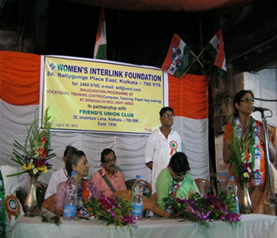
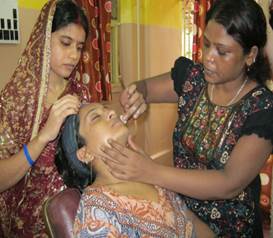
In response, and with support from the West Bengal Women’s Development Undertaking (WBWDU), a four-month Beautician Training Course was initiated for 14 women. The programme aimed to equip participants with marketable vocational skills, enhance their employability, and create pathways towards sustainable income generation and alternative livelihood opportunities.
OBJECTIVES OF THE SCHEME
The scheme has been observing the following broad objectives:
Location of Project : Sonagachhi Red light area in Kolkata-(Azad Hind Sporting Club 2C, Imambox Lane, Kolkata – 700006.)
Target beneficiaries : 20
SONAGACHI RED LIGHT ARE TAILORING TRAINING CENTRE:
Women’s empowerment is central to achieving social and economic inclusion, enabling women and girls to make informed decisions, exercise their rights, and lead dignified and self-reliant lives. With this objective, WIF operates a Tailoring Training Centre in the Sonagachi Red-Light Area to create sustainable livelihood opportunities for adolescent girls and women from marginalized backgrounds, thereby reducing their vulnerability to exploitation and intergenerational involvement in prostitution.
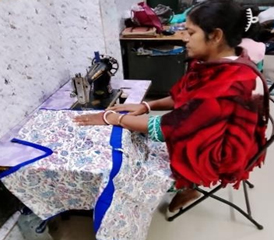
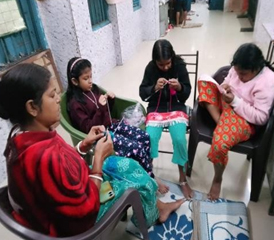
The training programme is conducted weekly and provides participants with practical tailoring and embroidery skills. Currently, six beneficiaries are enrolled in the programme and have acquired competencies in producing a range of items, including masks, petticoats, nightwear, soft toys, tops, churidars, embroidered handkerchiefs, and other garments and accessories. By equipping participants with marketable vocational skills, the initiative enhances their employability, promotes economic independence, and offers viable alternative livelihood options.
The project has played an important role in protecting and empowering adolescent girls by providing them with opportunities for skill development and personal growth. Strong support from the local youth club has further contributed to creating a safe and enabling environment for girls attending the remedial education and vocational training programmes.
We believe in developing and working with networks at community, national and international levels with a rights based approach.